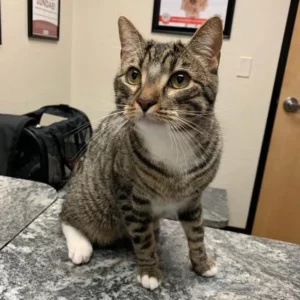

Cat Dental Care in Scottsdale, AZ
Healthy teeth and gums are a big part of keeping your cat comfortable, eating well, and feeling like themselves. At The Scottsdale Veterinary Clinic, our cat dental care in Scottsdale includes professional cleanings, oral examinations, dental X-rays, extractions when needed, and guidance for home care between visits. We also offer both traditional anesthetic dental cleanings and conscious sedation options for appropriate patients. Our goal is to catch dental disease early, help prevent unnecessary pain, and give cat owners clear information about what is happening below the gum line as well as what can be seen during an exam.
Why Cat Dental Care Matters So Much
Dental disease is common in cats, and it can progress quietly because many cats continue eating even when their mouths are uncomfortable. Plaque and tartar buildup can lead to gingivitis, periodontal disease, loose teeth, and tooth resorption, all of which can cause significant pain. In more advanced cases, oral bacteria may also contribute to broader health concerns, which is why dental care should be treated as part of overall preventive health rather than just a cosmetic cleaning.
We encourage owners to stay ahead of dental disease whenever possible. Cleaning the teeth while tartar and periodontal disease are still mild can mean more treatment options, lower overall cost, and less stress for your cat. Once disease becomes more advanced, extractions or more extensive treatment may be necessary, so early attention can make a meaningful difference.
Signs Your Cat May Need a Dental Exam
Cats are very good at hiding oral pain, which means the signs can be subtle at first. Changes in eating habits or behavior may be easier to notice than obvious mouth pain, and some cats may simply become quieter or more irritable. If something about your cat’s eating, grooming, or behavior changes, it is worth taking a closer look.
Common signs of dental problems include:
- Bad breath
- Difficulty chewing or dropping food
- Hissing or reacting while eating
- Drooling or excessive saliva
- Blood in the saliva
- Pawing at the mouth
- Head shaking or jaw chattering
- Red, swollen, or bleeding gums
- Visible plaque or tartar
- Broken or loose teeth
- Excessive yawning
- Reduced appetite or reluctance to eat
If you notice any of these signs, we recommend scheduling an evaluation rather than waiting for the problem to become more advanced. Prompt attention can help us identify the source of discomfort and discuss the most appropriate next step.
Professional Dental Cleanings for Cats
A professional dental cleaning allows us to address plaque and tartar both above and below the gum line, where home brushing cannot fully reach. Our recommended annual cleaning package is currently $442 and includes a basic chemistry and CBC blood profile, pre-anesthetic evaluation, anesthesia, ultrasonic scaling, oral charting, dental probing, low-speed polishing, fluoride treatment, IV fluids, antibiotic injection, pain injection, and advanced dental imaging.
For appropriate patients with lower-grade dental disease, we also offer conscious sedation dental care for $195. This includes sedation, ultrasonic scaling, oral charting, dental probing, low-speed polishing, fluoride treatment, subcutaneous fluids, an antibiotic injection, and dental X-rays. If extractions are required and general anesthesia must be induced, there is an additional $320 charge, not including extraction or medication costs. Cats age six or older require a blood profile and IV catheter with fluids for an additional $95.
Why Dental X-Rays Are So Important
A cat’s mouth can look relatively normal on the surface while hiding significant disease beneath the gum line. Dental X-rays help us evaluate tooth roots, jawbone, bone loss, and other areas that cannot be fully assessed through visual examination alone. They are especially useful for identifying conditions such as tooth resorption, which can be extremely painful but may not always be obvious without imaging.
During a comprehensive dental evaluation, we also examine the gums, teeth, and oral tissues closely and use a dental probe to identify pockets or areas of concern. General anesthesia or heavy sedation is usually necessary for a complete oral exam and dental imaging because it allows us to examine the mouth thoroughly without causing unnecessary stress or discomfort to the patient.
Understanding Gingivitis, Periodontitis, and Tooth Resorption
Gingivitis is inflammation of the gums and is often associated with plaque buildup. The gums may appear red, swollen, or painful, and the condition can progress if the underlying plaque and tartar are not addressed. Periodontitis involves deeper structures around the teeth, including the supporting bone and ligaments, and can ultimately lead to tooth loss.
Tooth resorption is another important feline dental condition. In these cases, the tooth structure gradually breaks down and is absorbed by the body, often causing significant discomfort. Treatment depends on the tooth and severity, but extraction or another appropriate dental procedure may be necessary. These conditions are one reason routine dental evaluations matter even when your cat is still eating normally.
At-Home Dental Care Between Visits
Professional cleanings are important, but what happens at home can help slow plaque and tartar buildup between appointments. Brushing is considered the most effective form of routine home dental care, and we recommend using a soft-bristled toothbrush and toothpaste made specifically for cats. Human toothpaste should not be used.
Brushing at least three times per week can help support better oral health, although daily brushing is even better for cats that tolerate it. Dental diets, treats, and chews may also help reduce buildup, but they should supplement brushing rather than replace it. We can help you choose options that make sense for your cat’s size, age, diet, and overall health.
When a Doctor Exam Is Needed Before Cleaning
If we find severe dental disease during an evaluation, one of our veterinarians may need to examine your cat before the cleaning is scheduled. In some cases, antibiotics may be recommended before the dental procedure, and the appointment may need to be rescheduled depending on the doctor’s availability. The current doctor examination fee in that situation is $120.
This additional step helps us address more advanced oral disease carefully and gives us an opportunity to discuss any other medical concerns that may affect anesthesia or treatment. Our approach to Scottsdale dental care for cats is to make sure the dental plan fits the whole patient, not just the visible condition of the teeth.
Frequently Asked Questions
Our recommended annual cleaning package is currently $442. Conscious sedation dental care is $195 for appropriate patients, with additional charges if general anesthesia, extractions, medications, or age-related bloodwork and IV fluids are needed.
Many cats require general anesthesia for a complete dental cleaning, oral exam, and imaging. Some cats with lower-grade periodontal disease may be candidates for conscious sedation, but the appropriate option depends on oral health and individual needs.
The right schedule depends on your cat’s age, oral health, tartar buildup, and risk for dental disease. Annual evaluation is a good starting point, and some cats may need professional cleanings more frequently.
Yes. We recommend brushing with a soft-bristled toothbrush and cat-specific toothpaste at least three times per week. Home brushing can help reduce plaque and support better gum health between professional cleanings.
If a tooth is broken, loose, resorbing, or affected by advanced disease, extraction may be recommended. We will explain why the tooth needs to be removed, review the expected costs, and provide appropriate pain management and recovery instructions.
Help Protect Your Cat’s Smile and Comfort
Dental disease can affect your cat’s comfort long before the problem becomes obvious, which is why regular evaluation and preventive care are so important. At The Scottsdale Veterinary Clinic, we combine professional cleanings, dental imaging, careful oral examinations, appropriate anesthesia or sedation, and home-care guidance to support better long-term oral health. So whether your cat needs a routine cleaning, an evaluation for bad breath, or treatment for more advanced dental disease, our team is here to help. Just call us at (480) 945-8484 to schedule cat dental care in Scottsdale or discuss your cat’s next dental visit.