

Scottsdale Veterinary Clinic
Open Everyday 7am - 11pm
(excluding some major holidays)
(480) 945-8484

Pet Dental


How do I know my pet has dental disease?

scottsdale pet dental

Up to 80% of pets develop some form of dental disease by 3 years of age. During regular physical exams, the veterinarian will take a look at your pet’s teeth and determine whether a dental cleaning is necessary. Dental disease can cause a number of medical issues including infection, loss of teeth, pain and inflammation, and can even affect the kidneys, liver, and heart. Here are some signs to look for that may help you identify if your pet has dental disease:

  • Bad breath
  • Gums are red, swollen, or inflamed
  • Gums bleed when they are brushed or touched
  • Painful when chewing, won’t eat ice
  • Eats canned or soft food regularly instead of dry food
  • pet teeth doctor scottsdale
  • If you press a cotton swab to your pets gums, their teeth chatter or bleed
  • Heavy tartar, green or black build up on teeth near gum line
  • Pus or discharge coming from the gums around the teeth
  • Pawing or scratching at face excessively
  • Swelling on only one side of the face or eye discharge.

THE SCOTTSDALE VETERINARY CLINIC’S DENTAL CARE RECOMMENDATIONS

Good teeth and gums are very important to the health of your pet. The average animal lives 2-3 years longer with healthy teeth than those with gingivitis and tartar. Bad teeth and gingivitis can lead to heart disease, kidney and liver failure, and many other diseases.

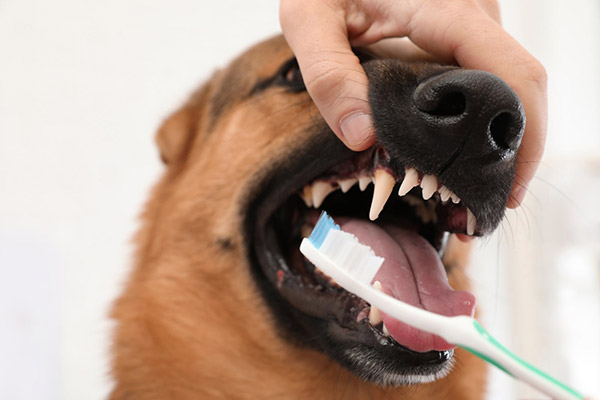
  1. We recommend you try brushing your pet’s teeth 2 times weekly. You can buy toothpaste and toothbrushes here or at the local pet store. Some pets tolerate a finger brush very well. Do not use a human tooth paste as these cannot be swallowed. Dentacetic wipes may be used as an alternative to brushing. If you are unable to brush your pet's teeth on a regular basis, ask about our brushless dental cleaning plan option for maintaining your pet's teeth.
  2. You can also use dental chews, and we recommend CET HEXTRA chews. A recent study in the Journal of Veterinary Dentistry noted a 46% reduction in gingivitis in dogs that were given rawhide chews. CET chews have enzymes that help eat the tartar off the teeth. The chews also have an antibacterial agent (Chlorhexidine gluconate) that acts like a mouth wash. These additions help to scrape tartar and plaque off the teeth and reduce bacteria in the mouth. If you purchase other chews from a local pet store, please keep in mind that they must be "enzymatic" to be really effective.
    *Most chews are safe and very beneficial to the teeth, however, if your pet swallows them whole they must be discontinued as they can cause a blockage and may require surgery. Other rawhides/chews tend to cause more problems with diarrhea or vomiting as they are cured with formaldehyde. The CET Chews are cured by a "bake-and-press" method, which make them safer to give to your pet, and easier to digest when swallowed.
  3. We recommend starting your pet on Plaque Off. This product bonds to tartar, breaks tartar off the teeth, and helps prevent new tartar from forming. Simply add this powder to your pet's food daily. This product works well for dogs and cats that do not like to chew or are too sick for a sedated dental cleaning.
  4. Greenies can be beneficial to the teeth. Make sure your pet does not swallow them whole as they can cause a blockage which may require surgery.
  5. Dental cleanings are recommended for all pets with tartar and gingivitis, or for those pets that may require tooth extractions. At The Scottsdale Veterinary Clinic we have great discounts on our Brushless Plan Option for Pet Dental Health. The brushless dental option includes dental cleanings every 6 months to keep the teeth in the best health. These dental cleanings are significantly discounted to make this procedure affordable and keep your pet in the best health. Most dogs and cats will require their first cleaning between 2-5 years of age.

Pet Dental Scottsdale

Dental Steps Explained

  1. Pre-Anesthesia Exam – Physical examination of the eyes, nose, ears, mouth, abdomen, legs, lymph nodes, skin, and coat, as well as listening to the heart, lungs, recording temperature and weight.
  2. Pre-Operative Antibiotic Injection – To prevent infection due to the bacteria that is released from the plaque during the scaling of the teeth.
  3. Place IV-Catheter – Allows for rapid and direct distribution of medications and fluids during the dental procedure.
  4. Pre-Operative Blood Evaluation – Evaluate the liver, kidneys, electrolytes, and blood counts to ensure anesthesia is catered to your pet’s medical conditions.
  5. Sedation & Pain Injection – Decreases pre-operative anxiety and pain during the procedure, and relaxes them in preparation for anesthesia induction.
  6. Anesthesia Induction – Injections are given to sedate, and an endotracheal tube is placed to administer inhalant anesthesia and maintain respiration during the procedure.
  7. Pulse Oximetry & Anesthesia Monitoring – Assists in monitoring the heart rate and oxygen saturation while under anesthesia. A technician trained in anesthesia will also be with your pet at all times to monitor the temperature, heart rate, respiratory rate, blood pressure, and EKG.
  8. IV-Fluid Therapy – Helps maintain hydration and blood pressure during dental cleaning.
  9. Temperature Management System – The use of heating pads, warming tables, blankets, and warm water bottles to keep your pet warm and comfortable while under anesthesia, as anesthesia can cause a drop in body temperature.
  10. Ultrasonic Scaling – High powered instrument supplying high frequency vibrations, used to remove plaque, bacteria, and calculus from the teeth.
  1. Sub-gingival Cutterage – The removal of calculus and plaque found on the tooth below the gum line.
  2. Probing for Pockets & Gingival Recession – Measure pocket depths around a tooth and check for exposure of root surface to establish periodontitis and periodontal pockets, and determine if x-rays and extractions may be necessary.
  3. Irrigate – Flushing of the mouth to remove loosened plaque and bacteria from dental surfaces.
  4. Dental X-ray – After probing, an x-ray may be taken to determine whether extractions are necessary due to bone loss and tooth decay, and to identify open root canals & infected tooth roots.
  5. Polish – To smooth the surface after the scaling of the teeth to decrease the adhesive ability of plaque in the future.
  6. Fluoride – An anti-plaque treatment used to help strengthen and desensitize teeth and discourage the development of future plaque.
  7. Recovery – A technician will monitor your pet after anesthesia until they are awake with the ability to stand up and has recovered swallowing reflexes.
  8. Remove Catheter – The IV catheter remains in place until your pet is ready to be discharged. A pressure bandage is placed to prevent bleeding, and is usually ready to be removed 15-20 minutes after.
  9. Dental Charting – The doctor and technician will complete a detailed medical chart after the procedure, along with home care instructions. The technician will call you to arrange a pick-up time after your pet is awake from anesthesia.
  10. Home Care & Dental Aftercare – The technician will go over any home care instructions and questions you may have, and we also send home a list of recommended preventative care techniques to help keep your pet’s teeth clean and plaque free.
pet dentist scottsdale vet dentist scottsdale az

Call TSVC to schedule your dental appointment today!
(480) 945-8484

Also check out our: Boarding Services - Grooming Services
 

The Scottsdale Veterinary Clinic

 
©2009 Scottsdale Veterinary Clinic All Rights Reserved